
Time, people and Love Made Practical
A reflection after the Northern Ireland premiere of Traumality by Ton Mazzone.
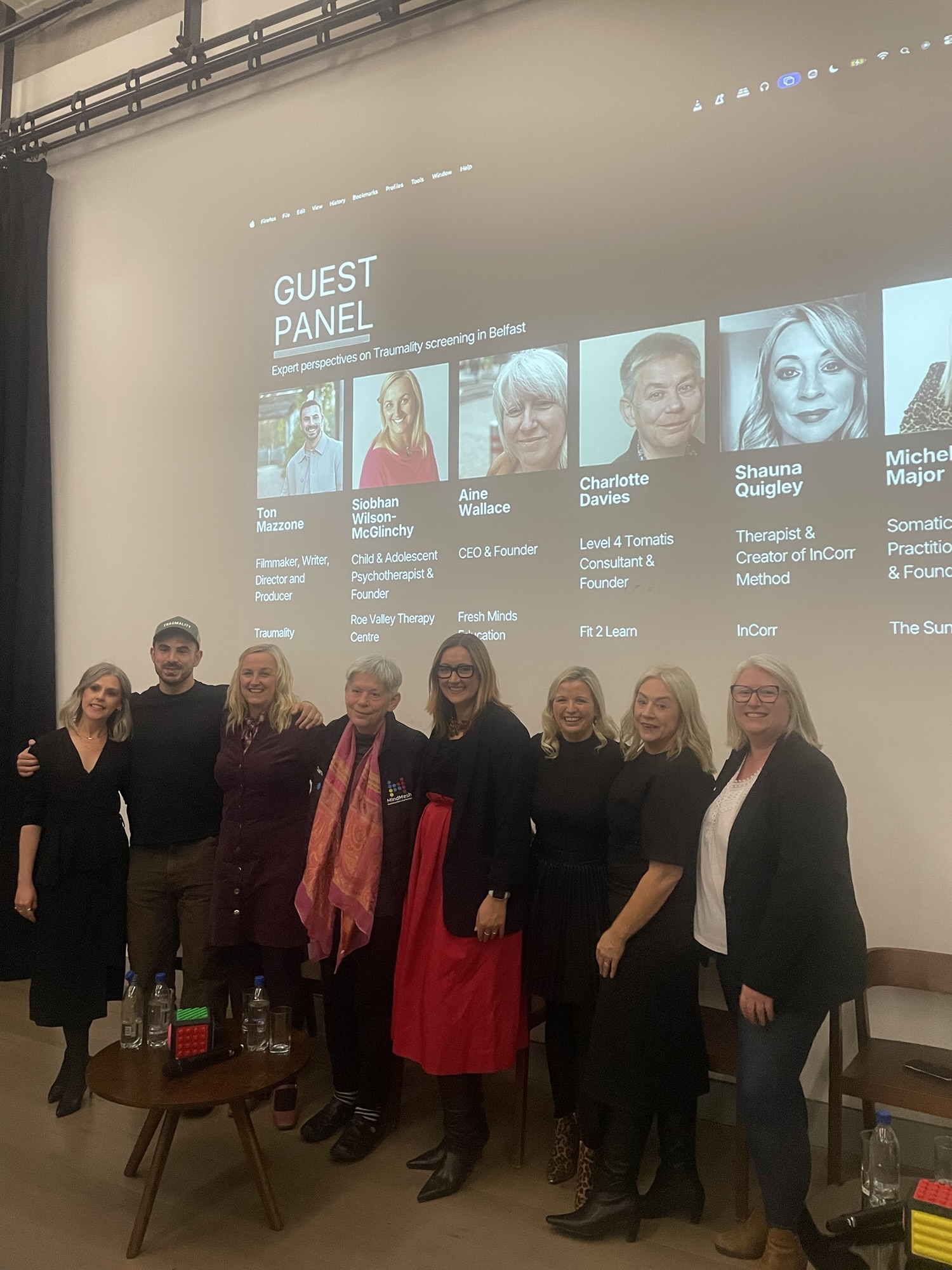
On Thursday evening, I joined the panel at the Northern Ireland premiere of Traumality at The MAC in Belfast.
I was alongside clinicians, practitioners and people leading change in how we understand trauma and respond to human distress. I wanted to support the organisers and the conversation they had worked so hard to bring together.
I was also nervous.
I don’t often put myself in that position. Sitting on a panel, feeling very visible, I wondered what I could add. I had prepared an answer, but when the question came, my words took a different direction.
Reflecting afterwards, I can see the connections between what I planned to say, what I remember saying, and what I would still like to add.
My first wish was for time.
After a slightly tongue-in-cheek suggestion that I would first sort out Stormont, Parliament, policy, legislation and the budgets needed for trauma-informed systems, I found myself wishing something very simple for people.
Time.
Time to think. Time to play. Time to relate.
Time for ourselves and for the people we love. Time to learn, reflect on what we are learning, and begin to put it into practice.
So many of us are living with demands that leave very little room to pause. Parents, teachers, carers and practitioners are trying to care for others while stretched themselves.
I keep wondering how we create the conditions for safety, connection and wellbeing when life feels like a treadmill.
If we want people to respond with patience, curiosity and compassion, we have to consider whether their lives allow room for those things.
My second wish was to put knowledge into people’s hands.
I spoke about a kind of devolution: making understanding about trauma and emotional wellbeing accessible throughout our communities.
We need our GPs, psychiatrists, psychologists, psychotherapists, counsellors and other skilled professionals. Their work matters enormously.
And this knowledge belongs with parents, carers, teachers, aunties, uncles, neighbours, coaches and friends too.
When something devastating happens, the first person there is often someone who loves us, teaches us, works alongside us or lives nearby. It might be a funeral director supporting a family through an unimaginable day.
Very often, those people desperately want to help. They need confidence, understanding and support themselves.
A child lives a whole life between appointments. Their experiences are shaped by where they play, who notices them, how adults respond when they struggle, and whether they have relationships they can depend upon.
That gives us an extraordinary opportunity to make understanding part of everyday life.
We have been putting this belief into practice for years.
One thing I wanted to give more space to was the work already happening through Fresh Minds Education.
Around ten years ago, we created Fresh Little Minds. It has now reached 13,500 young people.
Through creative, practical experiences, we bring learning about emotions, relationships and resilience into children’s lives. We work with the adults around them, and continue to seek ways to reach more parents and communities.
Our suicide prevention training is also deeply relational. Human story is central to how we explore distress, challenge assumptions and build understanding.
For me, connecting with the heart helps open the mind to learning. People need opportunities to feel, question, reflect and consider how they will respond when someone needs them.
I also see committed change makers within education. I work alongside people bringing enormous care and creativity into their schools and communities. I see the changes they make, and the constraints they face.
Their efforts deserve recognition and practical support.
And there was something in my prepared answer that I want to say here.
Not all pain is preventable. And not all pain is pathological.
We cannot prevent every death, every loss, every tragedy or every difficult experience.
But we can do much more to reduce the additional harm that can follow.
The silence when someone needs acknowledgement. The isolation when they need company. The experience of asking for help and feeling unheard. The withdrawal of people who care but don’t know what to say.
We need specialist services, accessible support and systems that listen. We also need places to belong, opportunities to connect, and communities able to stay alongside people in pain.
We should be creating those conditions long before someone reaches crisis.
At Fresh Minds Education, we have a phrase: Love Made Practical.
It means asking what compassion looks like in the ordinary places where people live their lives—and then finding ways to put it into action.
That is what I want for Northern Ireland: people with time to care, knowledge they can use, and the support to make a difference.
Thank you to the organisers, my fellow panellists and everyone who contributed to the evening. I am grateful to have been part of the conversation, even with the nerves.
Áine
Founder, Fresh Minds Education